



The tug doesn’t impress anyone on the ramp.
It’s an unglamorous piece of ground support equipment. No passengers. No crew. It doesn’t fly, and it doesn’t generate revenue. But when a fully loaded widebody needs to push back from the gate, or when a 70-ton aircraft needs to move across a crowded maintenance bay — the tug is the only thing that matters.
Not because of its size. Because of where it applies leverage, and when.
That’s not an observation about ground equipment. That’s your most experienced technician, and you haven’t noticed them leaving.
A Double Bind
The industry is caught between two converging pressures that most executives are treating as separate problems. They are not.
Aircraft aren’t retiring on schedule. Production backlogs, parts shortages, and rising leasing costs have pushed operators to keep aging fleets flying well past their intended service life. Widebody retirement ages are now projected to reach nearly 24.5 years by 2034 — up from a pre-COVID average of 23 years. Older aircraft require deeper structural inspections, more corrosion monitoring, and significantly longer hangar time. Every year a plane ages past its intended retirement window, the maintenance burden compounds.
At the exact same moment, the technicians who know how to work on those planes are leaving. Employees aged 55 to 60 now represent 35% of the MRO workforce. Those aged 18 to 30 account for a single-digit share. Oliver Wyman projects a shortfall of 40,000 aviation mechanics in North America alone by 2028. The Aviation Technician Education Council confirmed in 2025 that even with record new certifications issued — the second-highest total since records began in 1999 — demand is still dramatically outpacing supply.
Older planes need more experienced hands. Experienced hands are disappearing. Both curves are moving in the wrong direction simultaneously.

That is the double bind. And most organizations are responding by reaching for the one tool that won’t solve it: AI.
The COBOL Warning
This has happened before. In a different industry, with a different technology — and with consequences that are still being managed today.
For decades, the global financial system has run on COBOL — a programming language built in 1959 that still processes an estimated 70% of worldwide business transactions. The programmers who built and maintained those systems aged alongside them. The average COBOL programmer today is 55 years old, with roughly 10% of the remaining workforce retiring every year. Universities stopped teaching the language. The institutional knowledge of how those systems actually behave — not the documentation, the real operational knowledge — walked out the door with the people who held it.
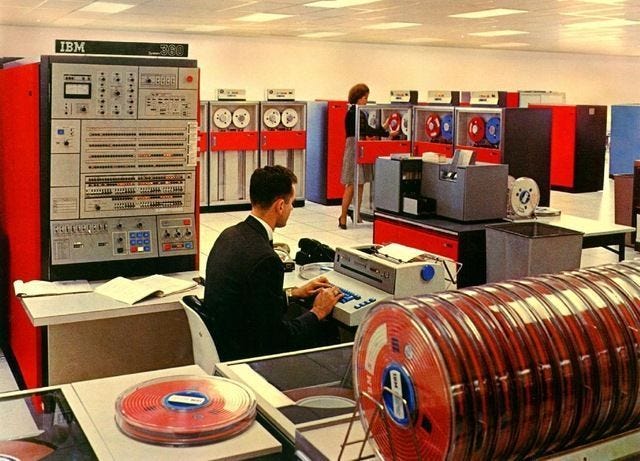
The result: the U.S. Social Security Administration is now undertaking a three-year, $1 billion AI-assisted emergency overhaul of infrastructure that should have been managed decades earlier. Dutch financial institutions discovered their COBOL crisis only when systems failed. Researchers at CWI found that experienced engineers were often “the only ones who know the systems well enough to maintain and improve them” — and most had already retired.
Aviation MRO is standing at the same inflection point. Different equipment. Same structural failure.
The knowledge isn’t in the manuals. It never fully was. It lives in the people.
The Wrong Lever
When multiple critical problems converge at once, the instinct is to reach for the biggest, newest tool available. In 2026, that tool is AI.
The investment case looks clean: predictive maintenance platforms, digital twins, AI-driven diagnostics. The logic is compelling. The sequencing is wrong.
Gartner research published in Harvard Business Review found that only one in fifty AI investments delivers transformational value, and only one in five delivers any measurable return at all. In MRO specifically, the reason is structural. You cannot train an algorithm on institutional knowledge that was never documented. You cannot build a predictive maintenance model on top of a workforce that doesn’t yet understand what it’s predicting.
Maria Aguirre, Head of MRO for Airbus Helicopters in North America, stated it plainly: the retirement of experienced technicians creates “a knowledge gap that no amount of automation can fill.”
The platform is only as good as the signal it’s fed. Right now, that signal is walking out the door at retirement age — and most organizations are investing in the platform before capturing the signal.

Signal Loss
AI cannot be the tug. Only another human can. And right now, nobody is building that pipeline.
Every experienced MRO technician carries something that isn’t in any manual. It’s the read on a vibration pattern that doesn’t match the diagnostic output. It’s the instinct to check a specific system when the data points elsewhere. It’s the memory of the last time a fleet of this age showed this exact wear signature — and what happened next.
That knowledge doesn’t transfer automatically to a new hire. It doesn’t migrate to a platform. It transfers through deliberate human contact — mentorship, structured documentation, and knowledge capture — before the person holding it is gone.
The industry has a name for what’s happening: the experience gap. Aviation Pros describes it as “the growing disconnect between retiring experienced engineers and the influx of younger workers who may lack hands-on, industry-specific expertise.” Certified but not calibrated. Certification gets a technician in the door. Calibration is what keeps planes airworthy.
The leverage point most organizations are missing: the experience gap is not a recruiting problem. Hiring more certified technicians does not close it. The gap lives in the transfer — and transfer requires strategy, not just staffing.
The Noise
Before you can find the Signal, you need to stop chasing the Noise. In MRO right now, the noise is loud, expensive, and dressed up as urgency.
Vanity Tech: The AI platform your OEM is pitching won’t fix a knowledge transfer problem. A predictive maintenance tool trained on incomplete institutional data doesn’t predict, it guesses. Before you sign the contract, ask one question: what is the signal this system is learning from, and who captured it? If you can’t answer that, you’re buying noise.
The Retirement Countdown: The most dangerous noise in MRO leadership right now is the assumption that you have more time. The 55-year-old technician on your floor looks fine. They’re showing up. They’re performing. The noise tells you the problem is future tense. The signal says the clock is already running.
Headcount as Strategy: Posting more technician roles is not a workforce strategy. If the experienced engineers aren’t there to calibrate the new hires, you’re filling seats without transferring judgment. Volume without structure compounds the gap — it doesn’t close it.
Navigation by Waypoints
The organizations that will come out of this cycle ahead are not the ones that hired fastest or invested in the most platforms. They’re the ones who treated knowledge transfer as a strategic operational priority — before their last tug retired, and before they built AI systems without a meaningful signal to learn from.
Treat institutional knowledge as a mission-critical asset. Identify who holds it, map what they know, and build structured pathways for transfer before retirement makes it academic. This is not an HR initiative. It is an operational imperative with direct impact on turnaround times, airworthiness, and cost.
Sequence technology investment correctly. Digital tools accelerate the work of experienced people. They do not replace the judgment those people carry. Build the knowledge base before building the platform on top of it. The Social Security Administration is spending a billion dollars to learn this lesson. Aviation doesn’t have to.
Recognize that the experience gap compounds quietly. It doesn’t announce itself with a grounded aircraft or a failed inspection. It shows up slowly — in slightly longer TATs, in diagnostic hesitation, in the deferred judgment call that eventually becomes a costly finding. By the time it’s visible in the data, the signal loss is already unrecoverable.
Clarity, Not Chaos. In this market, the best way to win is to follow your signals to reach the right outcome for you.
Sources: Oliver Wyman Global Fleet & MRO Market Forecast 2025–2035 · Aviation Technician Education Council Pipeline Report 2025 · Gartner / Harvard Business Review, 2026 · Airbus Helicopters, 2025 · CWI Netherlands / Computer Weekly, 2025 · U.S. Social Security Administration, 2025