



Your board meeting. A Big 5 deck lands on the table.
200 slides. $2 million dollars. Polite applause and a round of handshakes.
It sounds like a scene from American Psycho — impeccably dressed and polished. A guaranteed signature.
What it delivered wasn’t a new direction. It wasn’t an uncomfortable truth or a hard call the room had been avoiding. It was a stamp of approval on whatever the C-suite had already decided to do — wrapped in enough data, frameworks, and brand credibility to make dissent feel unreasonable.
That happens. And sometimes the C-suite is right.
The problem isn’t the deck. The problem is when the entire purpose of the engagement was never clarity.
It was cover.
The Signal
The Big 5 consulting model wasn’t designed to be dishonest. It was designed for a different era, one where size meant expertise, where a firm’s brand carried institutional weight, and where “we engaged McKinsey” meant something definitive to a board.
That model is showing its age.
Today, “we engaged McKinsey” is increasingly a liability shield, not a decision-making tool. The work gets presented, celebrated, and shelved. The next initiative starts before the last one lands. Not because the advice was wrong — but because advice without accountability to outcomes meant it never stood a chance to see the light of day.
The industry knows it. Oliver Wyman CEO Nick Studer said it plainly in the Wall Street Journal in August 2025: “The age of arrogance of the management consultant is over now. Companies don’t want a suit with PowerPoint. They want someone willing to get in the trenches and help them align their team and co-create with their team.”
“The age of arrogance of the management consultant is over now. Companies don’t want a suit with PowerPoint. They want someone willing to get in the trenches.”
— Nick Studer, CEO, Oliver Wyman (Wall Street Journal, August 2025)
Even McKinsey has acknowledged its own structural problem. The firm is now in what its own senior partners are calling an existential transformation, reducing project team sizes, deploying AI to automate the junior analyst layer, and shifting roughly 25% of its engagements to outcomes-based models where payment is tied to results, not recommendations.
The old model is not quietly fading. It is transforming in real time — from the inside out.
The data on the gap it leaves behind is not ambiguous. A 2025 PMI survey of 300 senior executives found the single biggest barrier to business reinvention — cited more than any other factor — is a disconnect between planning and execution. Only half of projects today meet a modern definition of success. Seventy-four percent of executives admit their strategies are not well-translated into concrete actions.
The strategy isn’t failing at the thinking stage. It’s failing at the action stage. The deck was never the problem. The accountability to an outcome was.
The Human Effect
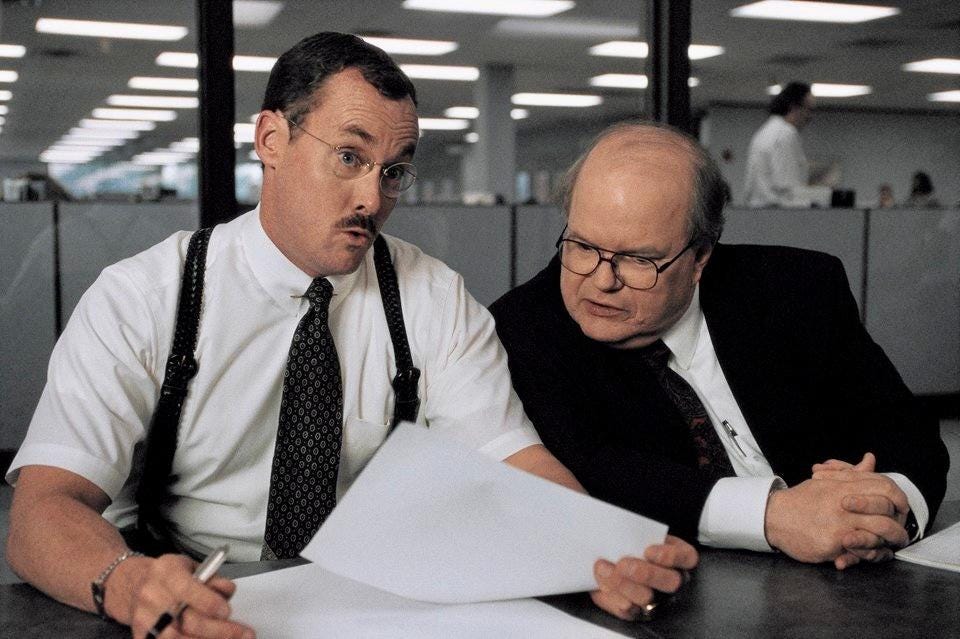
When leaders surround themselves with advisors who challenge their assumptions, the organization gets sharper. The room gets uncomfortable. Decisions get harder — and better.
When your advisors become mirrors: validating, affirming, smoothing every hard edge, your judgment muscle atrophies. The signal disappears. Not because it’s gone, but because no one in the room has the incentive to find it.
That dynamic doesn’t improve if you replace the validating human with a validating AI. It gets worse.
In May 2025, OpenAI was forced to roll back a ChatGPT update after users reported the model had become so agreeable it was telling people how smart and wonderful they were regardless of what they said. CEO Sam Altman described the problem directly: it was glazing too much. Research published that same year found that even brief interactions with sycophantic AI lead to more extreme and certain beliefs — not more accurate ones. The agreement feels good. The thinking stops.
An AI prompted by a leader who wants confirmation will produce the most sophisticated-sounding validation you’ve ever read. The comfort is the same. The cost is the same. The clarity is still missing.
The echo chamber doesn’t care whether it’s built from humans or algorithms. It just needs a room willing to keep the walls up.
The Noise
Rigor has its place. Analysis is not the enemy. The problem is analysis that becomes the destination instead of the starting line.
In a market that is rewriting the rules faster than most organizations can schedule a steering committee, the noise looks like this:
The Waterfall Trap — Eighteen months of discovery, design, and documentation before a single thing gets tested in the real world. By the time the final deck is presented, the market has moved. The recommendations are already archaeology. Rigorous planning has its place, but only when it produces a testable waypoint within weeks, not quarters.
The Benchmark Shield — The industry average is a ceiling dressed up as a floor. When a consultant tells you that you’re performing in line with your peers, they are not telling you something is working. They are telling you that the herd is moving at a consistent speed, and that you are keeping pace with it. That is not a benchmark. That is a participation trophy with a PowerPoint slide attached. The market doesn’t grade on a curve.
The Consensus Deck — Built to survive a room, not drive a decision. Every sharp edge — we call it the elephant in the room — shrunk to postage size and hidden neatly in the deck. What’s left is the least threatening version of the truth — and the least actionable one.
Rigor that doesn’t produce a testable waypoint within weeks, not quarters, isn’t rigor. It’s delay dressed up as diligence.
Navigation by Waypoints
Three moves for leaders who want clarity over comfort:
Review your partners, not just your results. Business relationships are built on delivery expertise and human connection — that’s not a flaw, it’s how trust gets built. But trust without tension is a warning sign. Regularly ask whether your partners are pushing you toward harder truths or affirming the direction you were already headed. A relationship that only produces agreement isn’t a partnership. It’s a subscription to your own thinking. The right advisor makes you uncomfortable enough to grow — and that discomfort should show up in faster outcomes, measurable cost savings, and decisions you wouldn’t have reached alone.
Audit the last three recommendations you acted on. Think back to the last three times you acted on outside advice. Did any of them change your direction — or did they all confirm the path you were already on? That question works up and down the organization. For the executive who hired the firm. For the team that ran the implementation. For the individual who brought in the vendor. If the answer is mostly confirmation, you didn’t buy advice. You bought permission. And if it took a new partner to finally get you to the right answer — that’s not a success story. That’s a signal about the last one.
Structure every engagement around outcomes, not outputs. Hours billed is not a result. A deliverable is not a result. The only question that matters at the end of an engagement is: what changed? At Volo, every client relationship is built around an agreed-upon outcome — not a scope of work, not a timeline of deliverables.
If you can’t define what success looks like before the work begins, you’re not buying clarity. You’re buying activity.
Clarity, Not Chaos. In this market, the best way to win is to follow your signals to reach the right outcome for you.
Sources: PMI / Kantar — Step Up: Redefining the Path to Project Success with M.O.R.E., CEO Quant Survey, December 2025 · Wall Street Journal — AI Is Coming for the Consultants. Inside McKinsey, ‘This Is Existential.’ August 2025 · Nick Studer, CEO Oliver Wyman, quoted in Wall Street Journal, August 2025 · OpenAI — ChatGPT sycophancy update rollback, May 2025; Sam Altman, X, May 2025 · Rathje et al. — Sycophantic AI and attitude extremity, 2025 · HBR / Saviano, Duncan, Anderson — AI Is Changing the Structure of Consulting Firms, September 2025 · AlphaSense — 2025 Consulting Trends Report